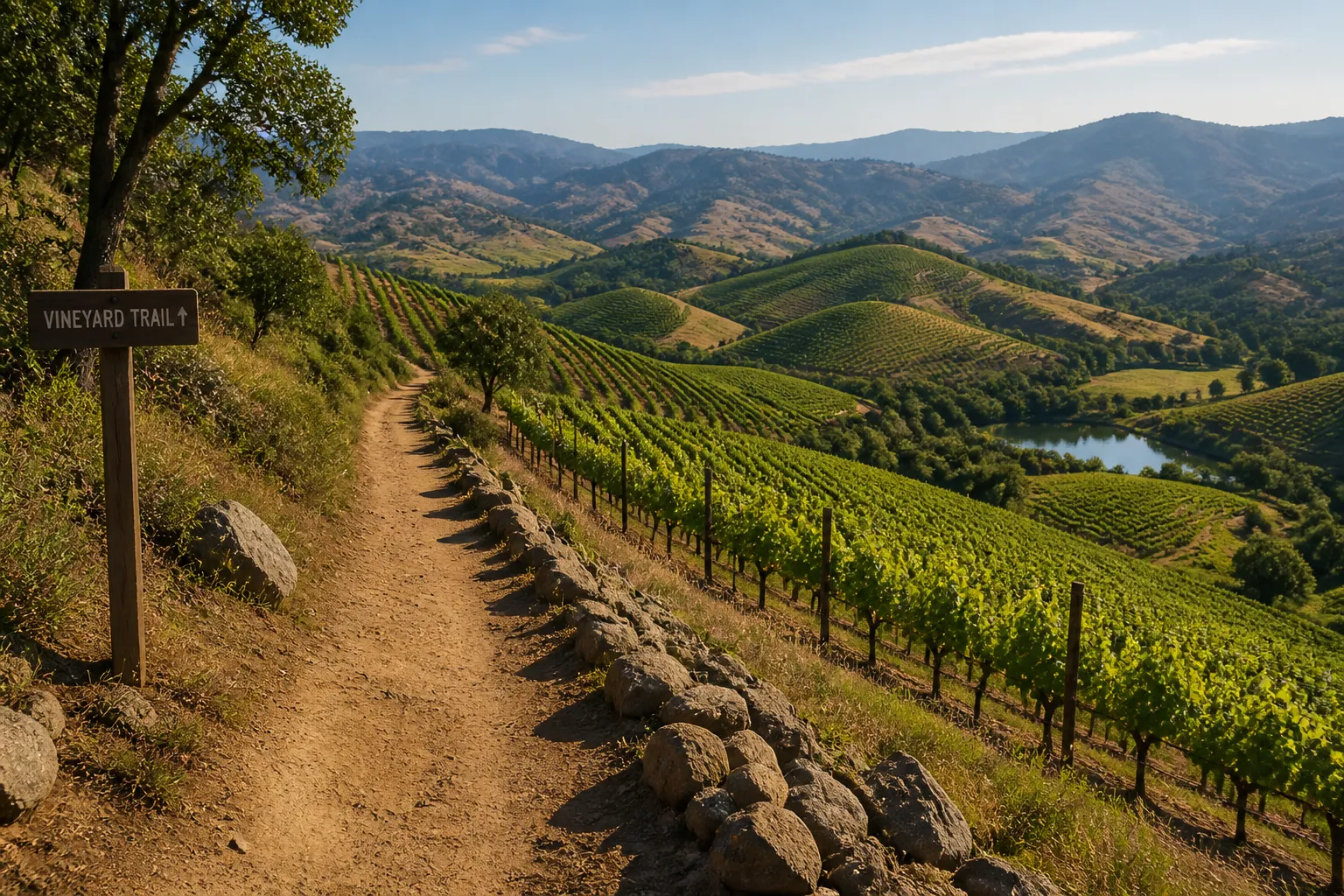
Walking trails in and around vineyard country offer a pace that driving cannot — time to hear row margins rustle, notice soil underfoot, watch hawks circle thermals above slopes, and feel how wind rises on ridge paths. Not every trail passes through vines; many skirt oak woodlands, creek corridors, or open grassland that completes the ecological picture hills display from a distance. This guide explains how to find appropriate walks, what to expect seasonally, and how foot travel intersects with working farms and private land boundaries.
Types of Walks Available Near Vineyards
Trail networks near wine regions generally fall into several categories, each with different rules and experiences. Public park trails in state or regional preserves may climb ridges with vineyard views but remain separated from agriculture by fences or buffers. Rail-trail conversions offer flat, family-friendly miles through valleys where vines appear across rights-of-way. Urban creek paths connect village centers to open hills. Farm-adjacent walks may exist only as part of paid tours — never assume a picturesque row edge is public path.
Unsigned social trails sometimes appear on apps but cross private property or sensitive habitat; stick to marked official routes unless a landowner explicitly invites you. Signage quality varies — carry a downloaded map and note junction markers. Loop trails reduce backtracking; out-and-back routes allow turn-around when heat or time presses.
Choosing Distance and Difficulty
Wine country walking is not uniformly gentle. Ridge trails may climb steeply with exposed sun; valley paths may flood seasonally or grow muddy after rain. Match distance to group capability and daylight — afternoon starts on long loops risk descending in dusk without cell service. Elevation gain matters more than flat mileage; a three-mile hill climb exceeds a five-mile valley stroll in effort. Read trail descriptions for shade coverage; open grassland walks punish midday summer heat.
- Short interpretive walks: Under two miles, often near visitor centers — good for introduction.
- Moderate half-day hikes: Three to six miles with mixed shade and viewpoints.
- Long ridge routes: Require water planning, layers, and early starts during hot seasons.
- Multi-use paths: Shared with cyclists — stay right, announce passes politely.
Footwear, Gear, and Safety
Closed-toe shoes with grip handle packed dirt, gravel, and occasional mud better than fashion sneakers or sandals. Trek poles help on descents for knees. Water capacity scales with temperature — carry more than you think you need on exposed routes. Sun protection includes hat and sunscreen even on cool mornings; UV reflects off open slopes. Tick and poison oak awareness applies in oak-woodland edges common near vineyards; stay on trail centers and check clothing after walks in brushy areas.
Tell someone your route and expected return when cell coverage is uncertain. Wildlife encounters — deer, coyotes, snakes in some regions — rarely threaten humans who maintain distance. Do not feed animals or leave food scraps that alter behavior. Dogs, where allowed, should remain leashed near livestock, wildlife, and other hikers; verify dog policy per trail — many preserves prohibit pets to protect habitat.
Etiquette Near Working Vineyards
Trails that overlook vines still demand agricultural respect. Do not hop fences for photos, cut through rows as shortcuts, or disturb irrigation lines and cover crops at trail margins. Harvest season increases machinery near valley floors — listen for trucks and avoid headphones on roads crossed by trail connectors. Photography from the trail of distant hills is fine; close worker or equipment shots require permission beyond trail rights. Drones are often banned in parks and nearly always inappropriate over private farm airspace without consent.
The best vineyard walk is one where you leave no trace and the farmer notices nothing except perhaps footprints on a legitimate path.
Seasonal Trail Character
Spring brings wildflowers on grassland edges and cooler hiking windows. Summer concentrates heat on south-facing slopes — start early or choose shaded woodland loops. Autumn adds color on vineyard hills visible from ridge trails, plus harvest traffic audible from valley connectors. Winter strips vines bare, improving structural views but shortening daylight and increasing mud on some soils. After heavy rain, trails may close to prevent erosion — check park websites before driving out.
Fog and frost alter traction and visibility in coastal-influenced regions; layers and patience matter. Fire season may close entire preserves when red-flag conditions prevail — respect closures even when skies look clear locally.
Connecting Walks to Scenic and Cultural Plans
Anchor walks between scenic drives — morning hike, lunch in town, afternoon drive in golden light. Pair short walks with farm visits only when schedules allow rest; tired legs and tasting rooms mix poorly. Photographers should consult our photography guide for carrying gear on trails and shooting respectfully from public paths. Travel planning helps reserve energy across multi-day trips rather than stacking long hikes on consecutive days without recovery.
Accessibility and Inclusive Options
Not all trails accommodate mobility devices or strollers. Paved rail-trails and some park paths offer better access; steep singletrack does not. Visitor centers increasingly publish accessibility notes — read them critically and call ahead when unsure. Resting benches appear on some official routes but not all; plan pacing for group members with varying stamina. Inclusive travel sometimes means choosing viewpoint drives with short paved overlooks instead of ridge hikes — valid and often equally rewarding visually.
How This Guide Was Put Together
This guide reflects general trail safety guidance, public land recreation policies common in agricultural regions, and viticulture landscape observation from permitted public routes. It does not map specific trails or guarantee conditions on any path. Verify closures, weather, and property boundaries locally before walking — hills invite exploration, but only where invitation is explicit and legal.