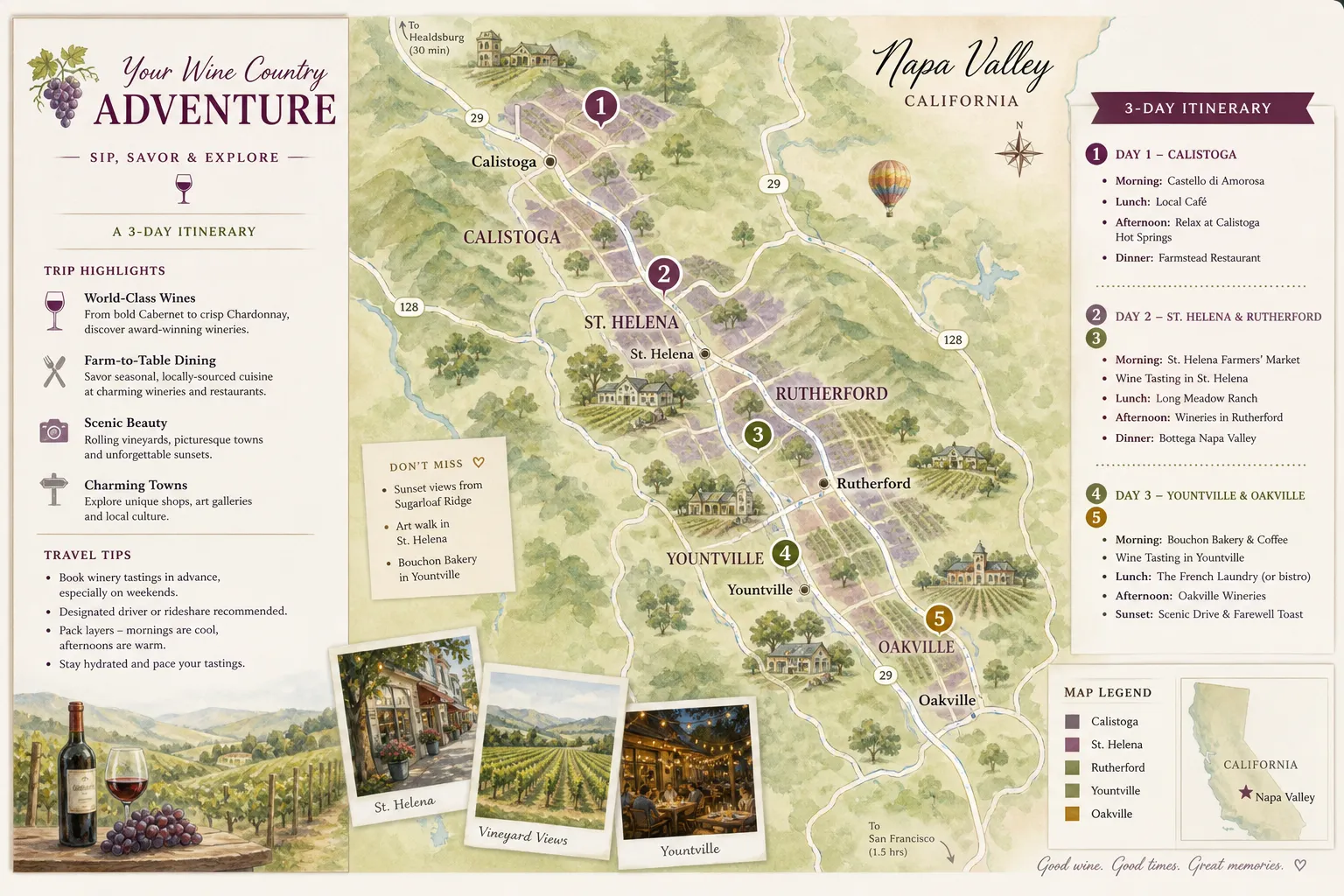
Planning a wine country trip rewards the same discipline applied to any thoughtful travel — clarify priorities before booking, align season with goals, build slack into driving days, and confirm logistics while conditions still change easily. Vineyard hills, scenic roads, villages, and harvest windows interact; a plan that treats them as connected chapters produces a smoother trip than a list of famous names scraped from rankings. This guide offers a step-by-step framework for building a wine country itinerary, plus a form to request a free planning checklist from our editorial team.
Step 1: Define What You Want From the Trip
Start with outcomes, not destinations. Are you seeking landscape photography on vineyard hills, village meals from our local cuisine guide, educational farm visits, autumn color during harvest seasons, or quiet walking trails with optional wine tasting? Group composition matters — children, mobility limitations, and designated drivers reshape feasible days. Budget and pace interact: luxury tasting appointments and casual market picnics can coexist if scheduled on different days rather than stacked competitively.
Write three priorities maximum. Everything else becomes optional filler that flexes when weather, road closures, or fatigue intervene — a normal part of countryside travel, not failure.
Step 2: Choose Season and Region Breadth
Season determines color, crowd density, and road activity. Spring emphasizes green rows and wildflowers; summer brings heat and peak tourism in many valleys; autumn concentrates harvest logistics and photographic color; winter offers structural landscapes and thinner crowds. Trying to cover multiple distant subregions in two days produces windshield fatigue — select a coherent geographic loop aligned with scenic wine roads rather than chasing scattered pins on a map.
Check regional event calendars for festivals described in our regional culture guide — attending one event can anchor dates while adjacent weekdays supply quieter exploration in countryside villages.
Step 3: Build a Daily Rhythm That Breathes
A sustainable day template: morning activity during cool light (walk, farm tour, or viewpoint drive), sit-down lunch in town, afternoon rest or low-intensity browsing, golden-hour photography or scenic drive, early dinner reservation. Avoid scheduling multiple alcohol-forward appointments without meals and hydration. Insert non-wine activities — museum hour, trail segment, market stroll — to prevent palate and attention fatigue.
- Two-night minimum: One night often feels rushed; two allows one full day plus partial arrival/departure edges.
- Midweek advantage: Lighter traffic and easier reservations than back-to-back autumn weekends.
- Buffer blocks: Unscheduled 90-minute windows catch unexpected viewpoints or cafe conversations.
- Weather pivot: Identify indoor alternatives — museums, covered markets — before rain arrives.
Step 4: Research and Confirm Before Departure
One week out: verify farm tour times, dinner reservations, and trail closures. Two days out: check wildfire air quality, heat advisories, and harvest road traffic notices. Day before: download offline maps for rural loops, confirm lodging parking, share itinerary with someone not traveling with you. Photography plans from our photography guide benefit from pre-scouted sunrise positions on maps — saving precious dawn minutes.
A good itinerary lists fewer stops than you think you can handle — wine country rewards depth over accumulation.
Step 5: Pack and Prepare for Rural Realities
Layers beat single heavy coats; mornings cool and afternoons hot on same day. Closed-toe shoes serve farms and trails. Sun protection and water bottles essential for walks. Designated driver plan documented before tasting — rideshare availability varies rurally. Cash helps at small market stalls; cards dominate restaurants. Reusable shopping bag supports market ethics. Paper backup for reservations when cell service drops on ridge roads.
Step 6: Build a Realistic Timeline From First Idea to Departure
A general planning timeline helps avoid last-minute gaps common in wine country trips where popular farm tours and village restaurants book out weeks ahead during autumn. Two to three months before travel, define priorities and choose a geographic loop narrow enough to explore without daily marathon drives. Four to six weeks out, reserve lodging near a village center when possible — walking to dinner beats driving after tastings — and book one or two anchor experiences such as a farm tour or festival day. Two weeks out, confirm trail conditions, air quality trends if traveling during dry seasons, and driving routes with offline map backups. One week out, reconfirm reservations, distribute itinerary copies to travel companions, and identify a weather pivot day with indoor alternatives. The day before departure, check road advisories, pack layers and closed-toe shoes, and set a shared designated-driver plan in writing rather than assuming informal agreement will hold under social pressure at tasting stops.
This timeline is flexible — last-minute trips happen — but earlier research widens choice more dramatically in wine country than in urban destinations with abundant same-day availability.
Step 7: Prepare for the Unexpected Without Abandoning the Plan
Rural travel rewards contingency thinking. A road closure may send you through a prettier alternate lane you would never have chosen. Heat may compress afternoon plans into shaded village hours. Smoke or fog may reduce scenic value on a photography day — pivot to museums, markets, or long lunches rather than treating weather as ruined trip. Keep one optional stop on each day that can drop without emotional collapse. Maintain emergency snacks, water, and a basic first-aid kit in the vehicle when looping between hills and villages. Know the distance to the nearest urgent care from your lodging — not to induce anxiety but to replace vague unease with factual preparedness. Share location with a trusted contact when hiking permitted trails from our walking trails guide. If tasting appointments stack despite intentions, skip one voluntarily rather than rushing staff and risking safety on roads afterward.
Request a Free Travel-Planning Checklist
If you would like a structured starting point tailored to your stated interests, submit the form below. Our editorial team uses your notes to point toward relevant guides on this site — not to sell bookings or represent specific properties. There is no fee and no obligation.
How This Guide Was Put Together
This planning framework reflects general travel organization practice adapted to wine country conditions described across Scenic Vineyard Hills guides on hainitoidic.info. It does not guarantee availability, pricing, or weather — confirm current details with local operators and official sources before finalizing plans. Flexible travelers who respect working landscapes and village communities often report the richest experiences, planned or not.