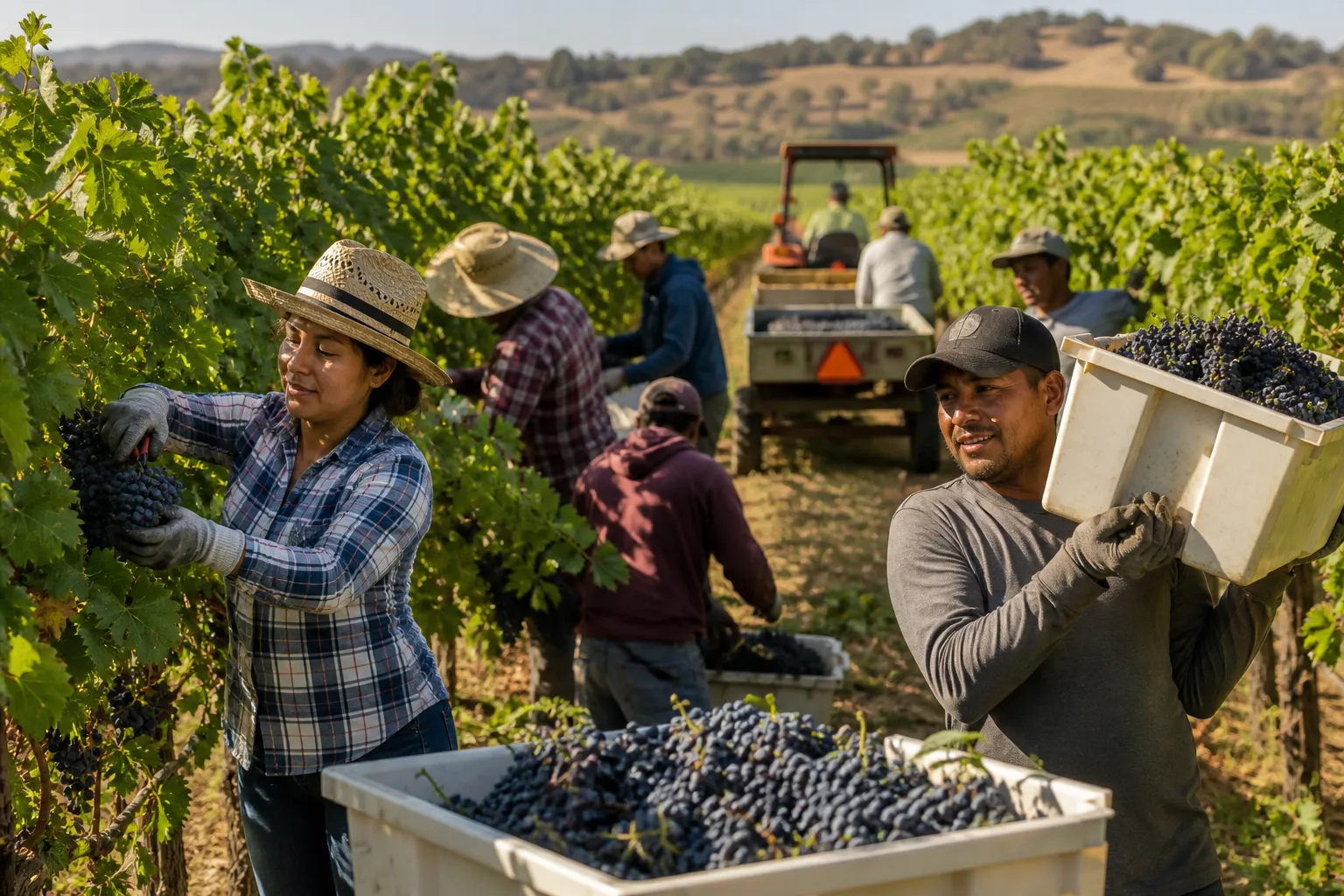
Harvest season is when vineyard country feels most alive — trucks on narrow roads, bins of grapes moving from row to crush pad, early-morning crews in headlamps, and hillsides shifting color as leaves turn and fruit disappears row by row. For educational travelers, understanding harvest timing, daily rhythms, and the difference between observation and interference makes the season richer and more respectful. This guide explains what harvest means in wine country, how it varies by region and year, and how to visit thoughtfully during crush.
What Harvest Actually Involves
Harvest is not a single event but a sequence of decisions stretched across weeks. Growers monitor sugar levels, acidity, flavor development, and weather forecasts — sometimes picking blocks in multiple passes as different grape varieties ripen on different schedules. Hand harvesting remains common on steep slopes and premium sites where selective picking matters; machine harvesting appears on flatter, larger-acreage plantings where speed and labor efficiency dominate. Once picked, fruit moves quickly to wineries for destemming, crushing, pressing, and fermentation — steps that may happen within hours to preserve quality.
From a landscape perspective, harvest changes color and texture: green canopies thin, rows open to reveal bare soil, and hills may look patchwork as some blocks stand empty while neighbors remain full. Dust on dry roads, portable lights at night, and temporary signage redirect traffic around weigh stations and receiving bays. The sensory palette shifts too — ripe grape aroma near crush pads, yeast activity near wineries, and busier cafe mornings as crews seek breakfast before dawn shifts.
Regional and Vintage Timing
Calendar dates mean less than conditions. Cool coastal-influenced regions may harvest late into autumn; warm inland valleys may begin in summer for early-ripening varieties. A hot year compresses timing; a cool year extends it. Rain forecasts can trigger urgent picks; smoke events in fire-prone regions may delay or reshape decisions entirely. Travelers who fixate on a single "peak harvest weekend" often miss the broader season — early varieties like some whites may finish before tourists arrive expecting cinematic red-grape picks.
Consult regional agricultural extension summaries and local visitor bureaus for general windows, but treat them as ranges. Farms rarely publish exact schedules publicly because logistics change daily. If you hope to observe activity, plan a flexible stay and prioritize respectful distance over close access unless you hold an explicit tour reservation.
Daily and Nightly Rhythms
Many harvest operations run early morning or night to preserve fruit temperature and crew safety in heat. Daytime visitor traffic may therefore overlap with sleep cycles for workers — another reason to avoid honking, loud roadside gatherings, or drone flights over active rows. Midday can feel surprisingly quiet in fields while activity concentrates at winery receiving areas. Late afternoon may see second shifts, equipment cleaning, and road traffic as bins return empty.
- Early morning: Pick crews, truck movement, cool air — visually soft light but active work zones.
- Midday: Heat slowdown in some regions; good time for village meals, museums, shaded trails.
- Evening: Possible night harvest under lights on large operations — fascinating from public roads at distance, intrusive if approached closely.
Observing Harvest Respectfully
Harvest is high-stakes labor. Strangers in rows, tripods blocking gates, or vehicles stopping on haul routes create real hazards and costs. Observe from public rights-of-way, permitted tour routes, and visitor centers that explain crush without entering working zones. Do not pick fruit without permission — even a single cluster removed for a photo undermines trust and may violate property law. Ask before photographing workers closely; many are open to friendly interest but not to being treated as props.
Farm tours advertised during harvest may limit access to certain areas or require closed-toe shoes and signed waivers. Read policies carefully; children and mobility limitations may be restricted near moving equipment. Our farm visits guide expands on choosing educational experiences versus passive roadside viewing.
Harvest Festivals and Community Events
Many towns host harvest festivals that celebrate agriculture with markets, parades, music, and charity auctions. These events differ from field work — they are staged for public enjoyment and often raise funds for local services. They can be excellent entry points for regional culture, but they also draw crowds, fill parking, and inflate lodging prices. Book early if festival weekends anchor your trip, or visit midweek adjacent to events for lighter traffic while retaining some seasonal energy.
Harvest teaches time — fruit waits for no itinerary, and the countryside honors biology before tourism.
Seasonal Travel Logistics
Harvest concentrates traffic on scenic wine roads and village main streets. Allow extra drive time, keep fuel topped up in remote loops, and carry water and snacks when restaurants sit on long waits. Lodging near countryside villages fills quickly; consider smaller neighboring towns with reasonable drive distances. Air quality during dry autumns may degrade with dust or smoke — sensitive travelers should monitor regional air reports and adjust outdoor plans.
Photographers should read our photography guide for ethical capture during active seasons — long lenses from public vantage points often tell stronger stories than intrusive proximity. Autumn color on vineyard hills may peak before, during, or after pick depending on variety and farming choices; leaf color and empty rows can coexist in the same valley.
After Harvest: What Changes on the Hills
Post-harvest landscapes reveal trellis bones, cover crop planting, and compost spreading — quieter but instructive. Wineries shift to indoor fermentation work less visible to passersby. Tourism marketing may still say "harvest" while fields already rest. Late autumn and early winter offer structural beauty and thinner crowds, useful for travelers who prefer contemplative walking trails over festival energy.
How This Guide Was Put Together
This guide reflects general viticulture education materials, regional harvest tourism advisories, and common field safety practices described in agricultural extension publications. It does not provide real-time pick schedules or guarantee access to active harvest scenes. Always follow local guidance, property boundaries, and road rules — the most respectful harvest experience often begins with watching from a distance and supporting local businesses that sustain farming communities year-round.