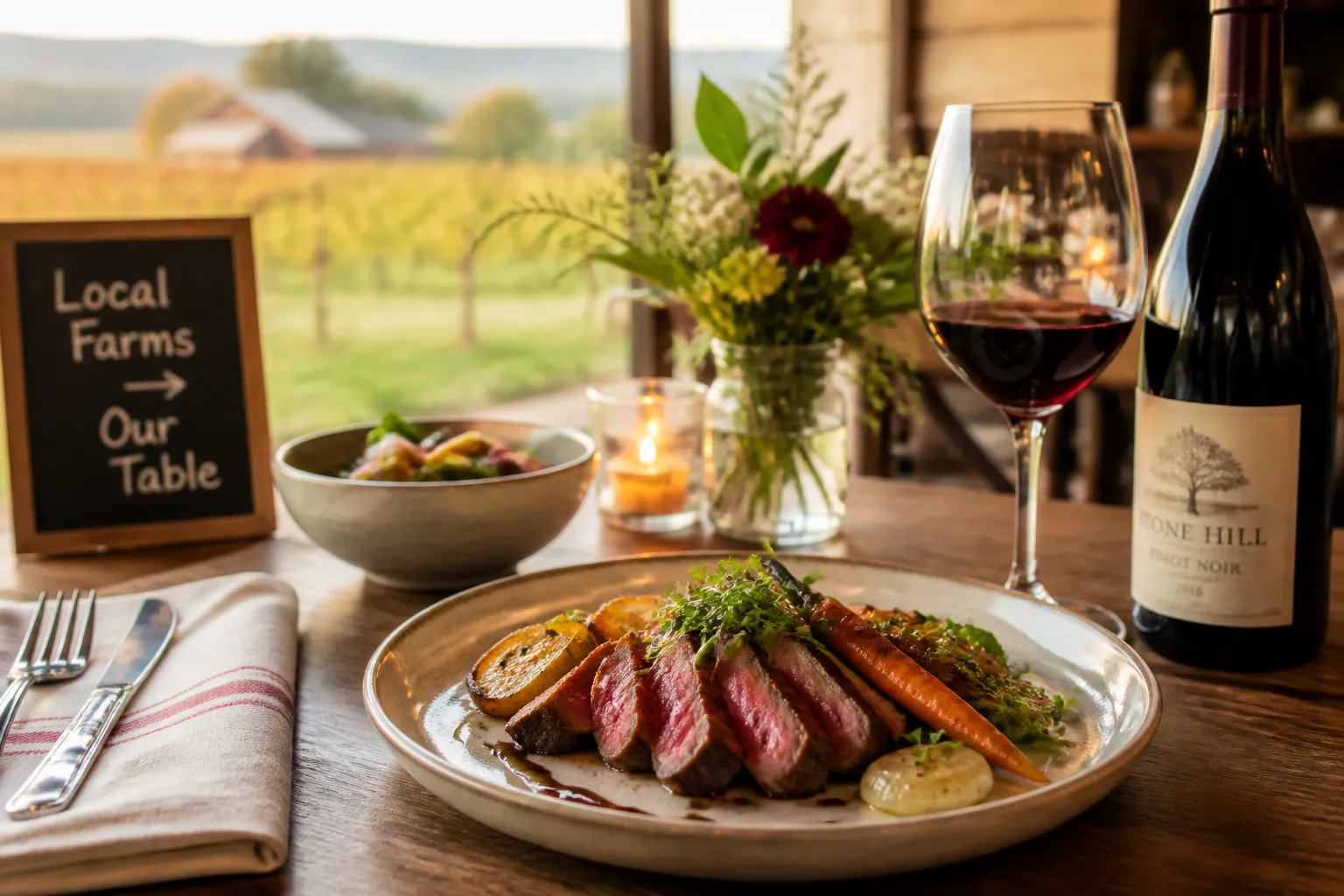
Local cuisine in wine country is more than wine pairing menus at tasting rooms — it is the accumulated food logic of a region shaped by climate, migration, agriculture, and daily habit. Orchard fruit, olive oil, dairy, nuts, wild herbs, and seasonal vegetables share the same hills and valleys as grapes, producing a table that makes sense on a cool evening after a long walk or a slow lunch between scenic drives. This guide explores how to understand and enjoy local cuisine in vineyard regions without reducing it to cliché or luxury performance.
Ingredients That Follow the Land
Every wine region sits inside a broader agricultural mosaic. Mediterranean-climate valleys may produce tomatoes, peppers, figs, and citrus within short drives of vine rows. Cooler coastal-influenced areas favor brassicas, apples, and pasture dairy. Inland continental zones may emphasize grains, beans, and preserved foods that carry through cold months. Markets reveal this diversity more honestly than single-focus tourist strips — look for peak-season signage, bulk produce displays, and vendors who also sell to locals, not only sampler cups.
Cheese, bread, and cured meats often come from nearby farms with histories independent of wine marketing. Olive groves and nut orchards may share hillside roads with vineyards, explaining why local menus feature oils, tapenades, or walnut cakes alongside grape-centric dishes. Understanding ingredients as geographic neighbors — not props — helps you order thoughtfully and shop with curiosity.
Seasonality on the Plate
Seasonal eating aligns travel with place. Spring menus may highlight tender greens, asparagus, and early strawberries; summer emphasizes stone fruit, tomatoes, and grilled vegetables; autumn turns to squash, mushrooms, grapes beyond the bottle, and heartier stews; winter favors soups, braises, and preserved pantry items. Restaurants that rewrite menus frequently often track local supply honestly; static year-round "regional" dishes may import components out of season.
Harvest season adds overlap — fresh grape juice, verjus, or grape-leaf preparations appear in some traditions — but availability varies. Ask servers what is genuinely local this week rather than assuming marketing language matches the kitchen delivery sheet. Farmers market visits, covered in our countryside villages guide, complement restaurant meals with snacks for picnics or lodging kitchens.
Pairing Principles Without Pretension
Wine pairing advice can intimidate; a few practical principles suffice for most travelers. Match intensity — delicate whites with lighter fish or salads; fuller reds with grilled meats or aged cheese. Consider acidity — tangy foods often harmonize with crisp wines rather than fighting them. Regional pairing traditions exist because flavors co-evolved: if locals have paired a cheese with a nearby wine for decades, the combination likely works even if it violates abstract rules you read online.
- Start local: Ask for wines and foods from the same valley or neighboring counties.
- Share plates: Small tastes across a table beat committing to multiple full glasses while driving.
- Water and bread: Simple anchors improve any pairing session and pacing.
- Non-alcohol options: Sparkling water, grape juice, and local sodas keep meals inclusive for non-drinkers and designated drivers.
Where Meals Fit in a Wine Country Day
Food pacing shapes travel quality. A heavy midday tasting followed by no lunch produces fatigue and poor decisions. A common sensible pattern: light breakfast, morning scenic or farm activity, sit-down lunch in a village, afternoon walk or photography during heat, early dinner with reservation. Picnics — where permitted on public grounds — combine market purchases with trail or park stops; pack out all waste and avoid alcohol where local ordinances prohibit open containers in parks.
Breakfast culture varies; some towns have strong cafe scenes while others offer only quick options — plan if early starts matter during harvest season observation days. Dinner reservations become essential on autumn weekends; midweek tables ease. Informal counters and delis often serve the best honest meals in a region, hidden from glossy brochures.
Culinary History and Migration
Regional cuisine carries migration stories — Italian, Mexican, Portuguese, Eastern European, and Asian communities have shaped wine country kitchens far beyond Francophile stereotypes. Historic districts may host family restaurants whose recipes predate current tourism branding. Our regional culture guide connects festivals and crafts to these layers; food is often the most accessible entry point.
Eating locally in wine country means following supply chains backward — from plate to market to field on the hill you drove past that morning.
Ethical and Practical Considerations
Popular restaurants strain small-town labor pools seasonally; tip fairly, arrive on time for reservations, and cancel promptly if plans change. Dietary restrictions require clearer communication in rural kitchens than in urban chains — call ahead when possible. Food waste at tasting counters and buffets adds up during events; take modest portions. Support businesses that source regionally when transparency matters to you; ask direct questions — many owners welcome interest.
Connecting Cuisine to Broader Travel
Combine meals with scenic drives by planning lunch near a midpoint viewpoint rather than backtracking. Link farm visits that include orchards, gardens, or cheese rooms — not only grape-focused tours. Photography of food belongs in our photography guide ethics section: respect restaurant policies and other diners' privacy. For trip structure, see travel planning for pacing templates that treat meals as anchors, not afterthoughts.
How This Guide Was Put Together
This overview synthesizes general food tourism guidance, seasonal produce calendars common to temperate agricultural regions, and publicly available culinary history notes from wine country visitor organizations. It is not a restaurant directory and does not guarantee availability of specific dishes or dietary accommodations. Menus change; seasons shift — treat every meal as a conversation with place rather than a checklist of famous names.