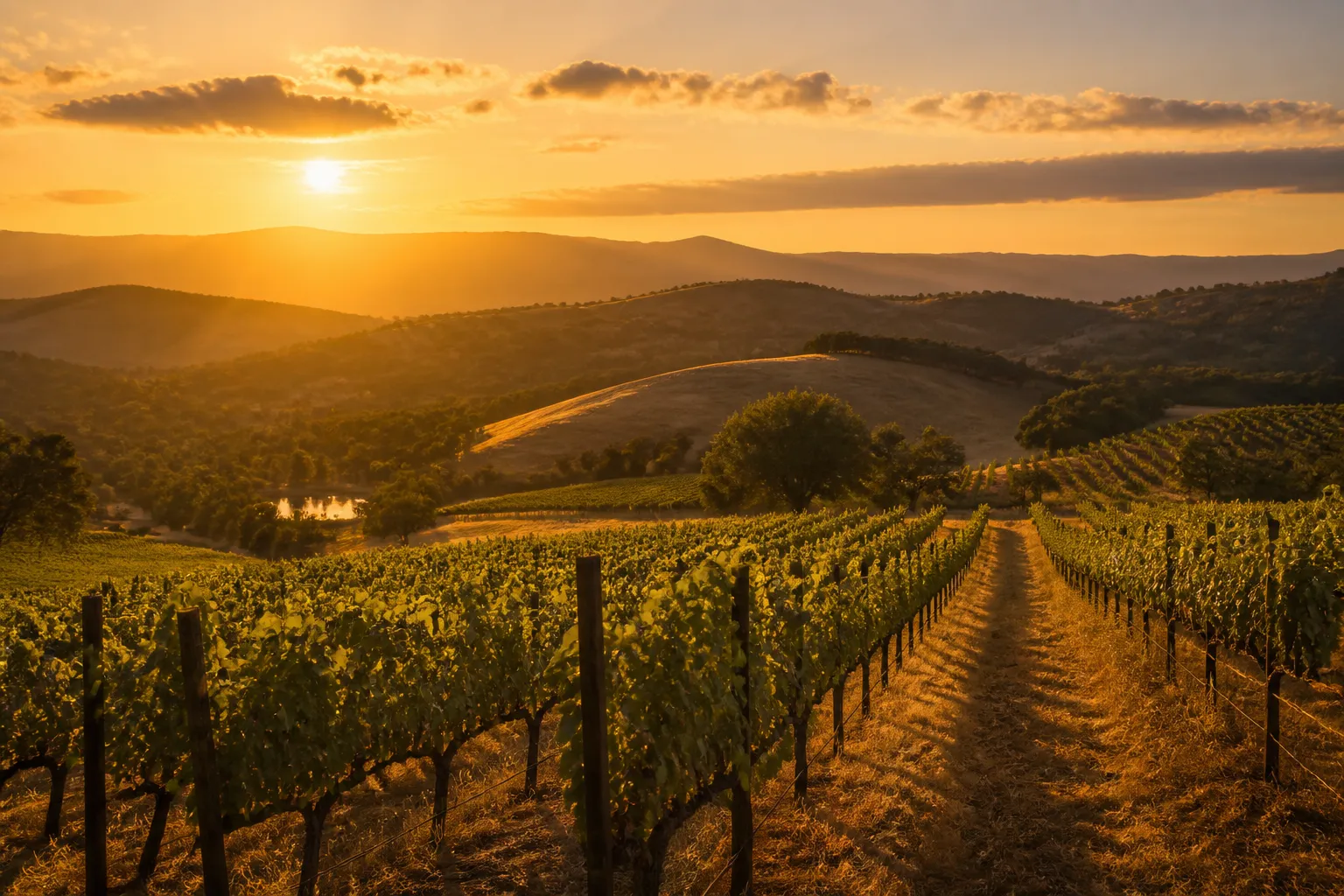
Vineyard country is among the most photographed agricultural landscapes in the world — repeating rows, rolling hills, seasonal color, and human-scale farm architecture combine into compositions that reward both quick snapshots and deliberate study. Yet popular images can flatten complexity into cliché: oversaturated sunsets, identical row tunnels, drones hovering over private farms. This guide offers practical photography advice for vineyard hills and countryside scenes, with emphasis on light, composition, ethics, and seasonal variety rather than gear envy.
Light and Time of Day
Light transforms vineyard hills more dramatically than almost any other variable. Golden hour — the window after sunrise and before sunset — rakes across rows at low angles, emphasizing texture, trellis shadows, and slope curvature. Midday sun tends to flatten contrast and bleach colors, especially in summer haze. Overcast days soften shadows and saturate greens, useful for detail work and avoiding harsh highlights on pale soil. Fog layers, common in coastal-influenced valleys, create depth when hills emerge in stages — patience at a fixed public vantage often beats driving frantic loops.
Direction matters relative to valley orientation. East-west valleys may glow at sunrise on one ridgeline and sunset on another; plan position accordingly using maps before shoot days. Backlit leaves during autumn can turn translucent gold; front-lit rows read cleaner for geometric patterns. Night harvest under artificial lights produces specialized scenes best captured from public roads at respectful distance without interfering with safety lighting or worker visibility.
Composition Beyond the Row Tunnel
The classic symmetrical row tunnel is effective but overused. Alternatives include diagonal rows entering frame from corners, single gnarled vine trunks as foreground anchors, hillside patchwork from elevation, and human-scale elements — barns, mailboxes, cyclists on permitted paths — that provide narrative scale. Include sky thoughtfully: empty blue can dominate; clouds add structure. Foreground grass, wildflowers, or fence posts create depth layers that separate amateur snapshots from considered frames.
- Leading lines: Rows, roads, and creeks guide the eye — align them toward a focal hill or building.
- Framing: Oak branches or archways at trail edges contain distant vines.
- Negative space: Fog or plain sky isolates a single hill shape.
- Seasonal markers: Mustard between rows, bare winter canes, or autumn color blocks tell time visually.
Gear Practicalities on Country Roads and Trails
Camera choice matters less than presence and restraint. Smartphones handle panoramic vistas well; interchangeable-lens systems benefit from wide angles for landscapes and moderate telephotos for compressing distant hill layers. Tripods stabilize low-light dawn shots but may be awkward on narrow pullouts — use compact travel models and stay off road surfaces. Polarizing filters cut glare on leaves and wet foliage after rain. Lens cloths essential — dust on dry harvest roads coats equipment quickly.
Pack minimal gear on walking trails to preserve balance on grades. Weather seals help in fog drizzle; zip bags protect against vineyard dust. Extra batteries drain faster in cold dawn air. Memory management matters on multi-day trips — offload nightly rather than risking card failure during a rare fog event.
Ethics, Privacy, and Legal Boundaries
Photography rights on public roads and designated viewpoints generally allow landscape capture, but private property lines begin at fences, irrigation access points, and unmarked farm edges — entering rows without permission is trespass regardless of camera type. Drones face increasing local restrictions; low flights over workers, livestock, or homes violate privacy and may breach FAA or municipal rules. Ask permission before close portraits of workers, shopkeepers, or festival performers.
Geotagging exact farm locations can encourage trespass and overcrowding — consider general regional tags when sharing publicly. Commercial shoots on private land require explicit contracts with landowners. Respect tasting room policies on indoor photography and other guests' privacy at meals covered in our local cuisine guide.
The photograph worth keeping often required waiting without trespassing — light moved, fog lifted, and the scene arrived to a patient observer on legal ground.
Seasonal and Harvest Considerations
Spring greens and wildflowers offer fresh palettes; summer haze and harsh midday light challenge schedules; autumn combines leaf color with harvest activity visible at distance; winter reveals structural lines on vineyard hills with fewer tourists in frame. Harvest dust, moving trucks, and crews change both content and safety — never block gates or halt on curves for a shot.
Festivals in villages provide cultural subjects — parades, markets, crafts — best captured with consent and awareness of crowd flow. Smoke events during dry seasons alter visibility; document conditions honestly rather than oversaturating through editing into fantasy.
Post-Processing and Storytelling
Moderate editing respects place better than heavy filters that turn every hill neon. White balance adjustments restore fog coolness or sunset warmth accurately. Cropping can remove distracting power lines if ethically acceptable; cloning out people or signs misrepresents public scenes. Captions add education — note variety, season, or aspect when known — turning pretty images into travel memory and teaching tools for others planning trips via travel planning resources.
Connecting Photography to Scenic Routes
Plan scenic wine roads with sun angle maps: east-facing overlooks at sunrise, west-facing ridges at sunset. Identify legal pullouts beforehand rather than improvising stops on blind curves. Pair photography days with lighter physical plans — dawn shoots tire travelers; schedule cafe breakfasts and short village walks afterward. Farm tours from our farm visits guide may allow curated angles impossible from roads — worth booking when visual study is a trip priority.
How This Guide Was Put Together
This guide draws on general landscape photography practice, rural property ethics common in agricultural tourism advisories, and seasonal observation patterns in temperate vineyard regions. It does not authorize access to private land or guarantee specific lighting conditions on any date. Weather and harvest logistics change daily — flexibility and respect protect both image quality and the communities hosting visitors.